
|

Our children are the first generation to grow up in an environment where recycling is common practice. This scale of recycling was not around when we were kids, and what little presence existed, well, it was not visible like it is today. The blue and green recycling bins did not take their places at the end of neighbor’s driveways until around the turn of the millennium.
Recycling behaviors expanded in the early 90s thanks to international collaboration at the end of the previous decade. In 1988, the Society of the Plastics Industry (SPI) developed a universal code for plastic types to facilitate consumer recycling. That code assists with product segregation, ensuring that similar plastics are processed together.
RIC divides plastics into seven groups. Each is outlined in the printable guide to plastic recycling codes and is explained in full below.
Although many people believe otherwise, there is no logic or meaning behind the order. PETE, located in the first position, is the most common consumer plastic and is easy to recycle, but PVC, in the third spot, is extremely difficult to process because it is so dense and rigid.
Decomposition times also vary and are not in any particular order. Unlike newspapers, which take two to four weeks to deteriorate, plastics have a longer shelf life. When not recycled, PETE bottles can take 450 years to decompose. That’s staggering! But compare it to a grocery bag that takes 1,000 years or a styrofoam cup that may never fully dissolve.
Hopefully those facts will provide incentive to recycle plastics. The printable SPI guide can be taped to the lid of your trash can as a reminder or above your recycling bin as a reference. Together, we can make sure that the years ahead will be as productive for the recycling movement as the ones behind us.
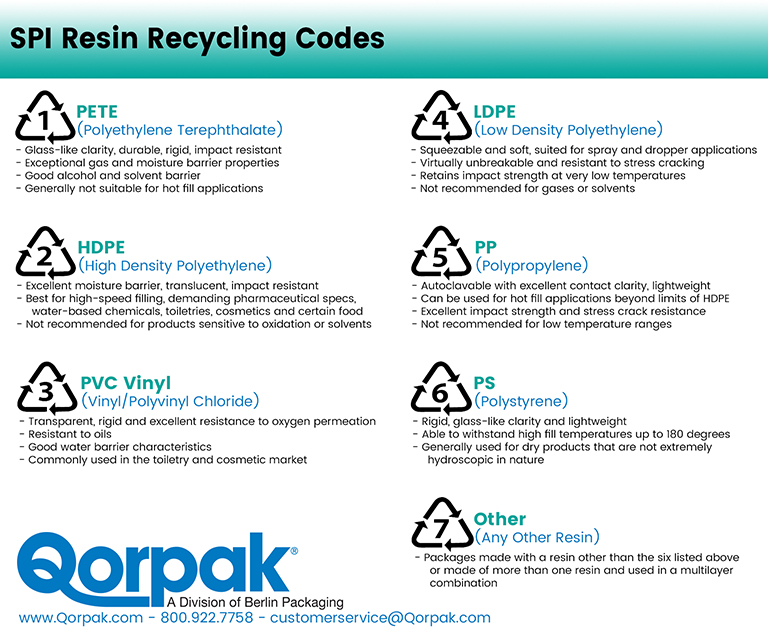
For a printable version of our Recycling Codes, click here.